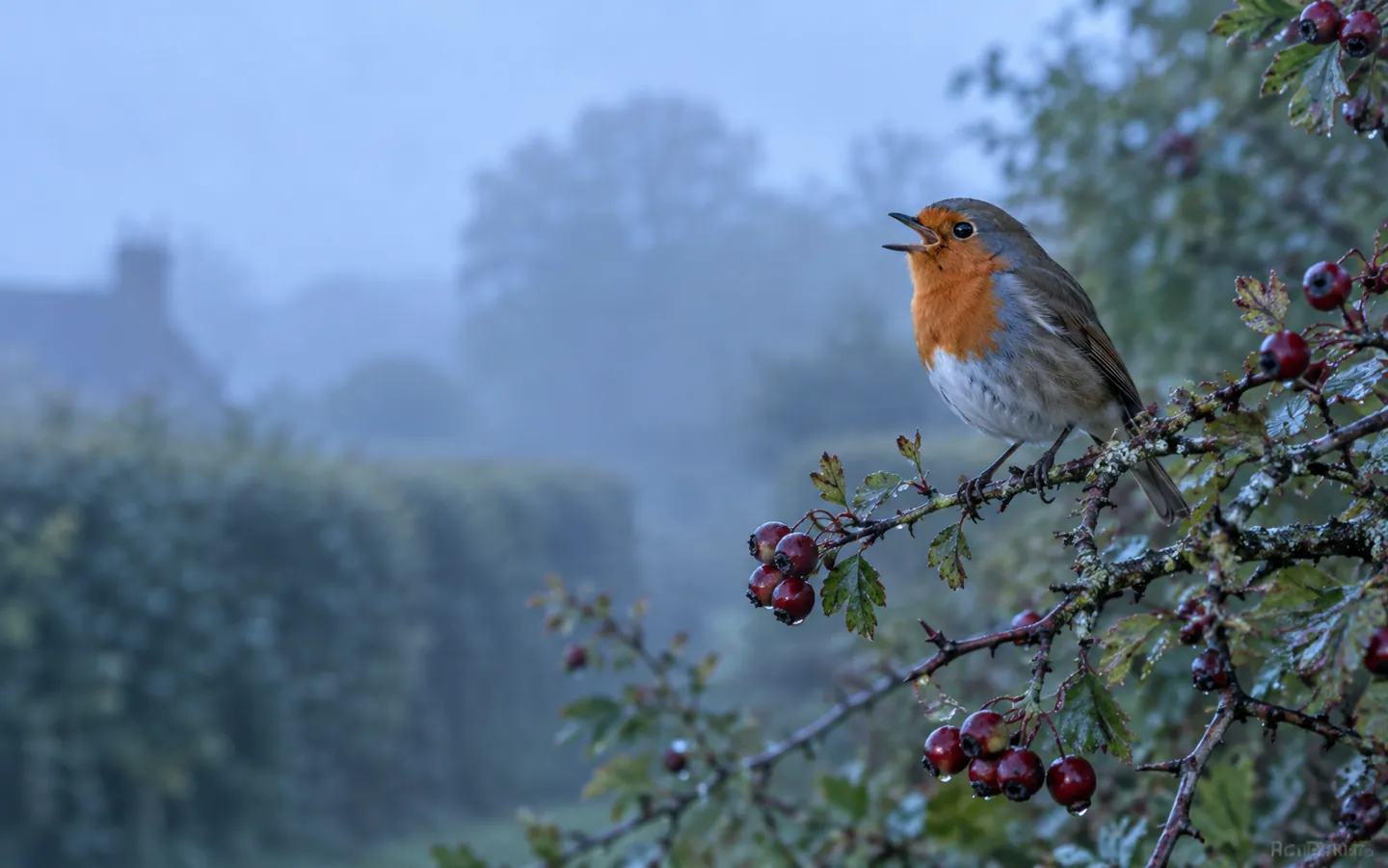
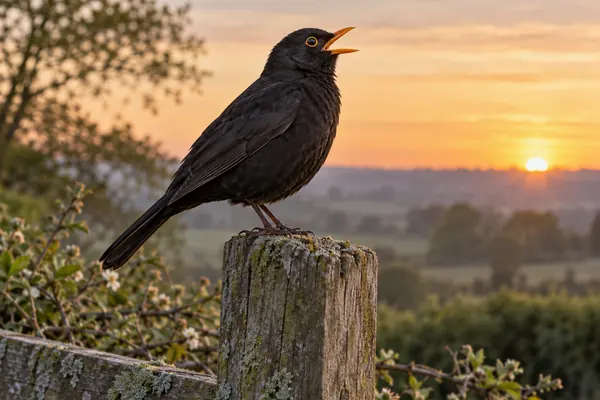
In spring, the first lightening of the sky sets off the dawn chorus.
It starts with one or two voices in the dark and swells as more birds join, lasting from 20 minutes to an hour. Researchers have worked out much of the running order, and some of the reasons behind it.
AI-generated image, not a photograph of a real person or place.
Big eyes sing first
Song says 'still here'
Noise changes the timetable
Birdsong, decoded
THE SHORT ANSWER
A roll call after the night.
Song is mainly about territory and mates. Dawn is still, calm and too dark to feed.
THE ORDER
Big eyes go first
Songbirds with larger eyes start singing at lower light levels, so earlier. Robins, with large eyes and pupils, sing early; chiffchaffs, with small eyes, later.
Pick a bird to see where it tends to come in. The bar shows how early in the dawn chorus it usually starts.
Running order from the RSPB; the eye-size link from Thomas et al. (2002), University of Bristol.
TWO NUMBERS WORTH KNOWING
A short, loud hour, pushed around by noise.
One figure on the chorus itself, one from a study of robins in a noisy city.
20–60 minutes
How long the dawn chorus lasts
It begins in the dark with one or two voices and surges as new birds and species join with the rising light. Moonlight, temperature, rain and cloud all shift the timing.
THE CHORUS · RSPB
18 of 67 sites
Sites where singing robins were also heard at night
Where robins sang at night, daytime noise averaged about 62.7 dB, against 52.9 dB where they sang only by day. Night-time noise across sites averaged 49 dB.
CITY ROBINS · SHEFFIELD
Near Berlin's Tegel airport, birds sang earlier before air traffic began. After it closed in 2020, several species shifted back; some still sang early.
FOUR WAYS TO LISTEN
Get up early, and listen in order.
Simple habits based on what the RSPB and researchers describe about how the chorus unfolds.
Be out before first light
The chorus begins in the dark, so arrive before the sky starts to lighten.
Listen for the first voices
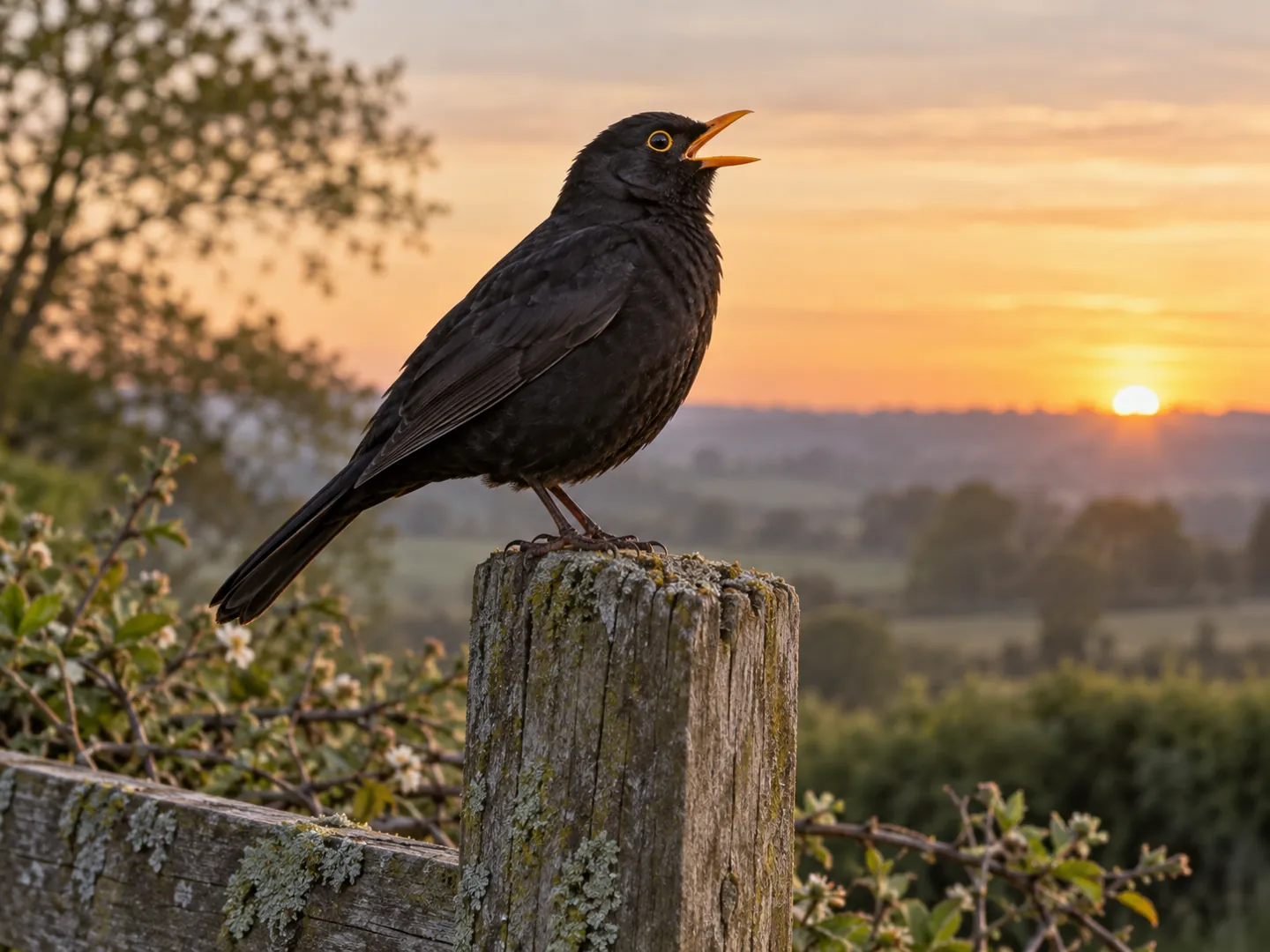
Robins, blackbirds and song thrushes usually get involved early. Learn those first.
Pick a still morning
Dawn tends to be still and calm, when song carries further. Rain and cloud can change the timing.
Try the city too
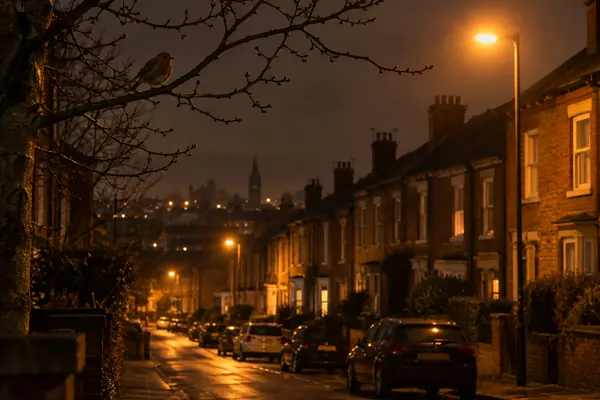
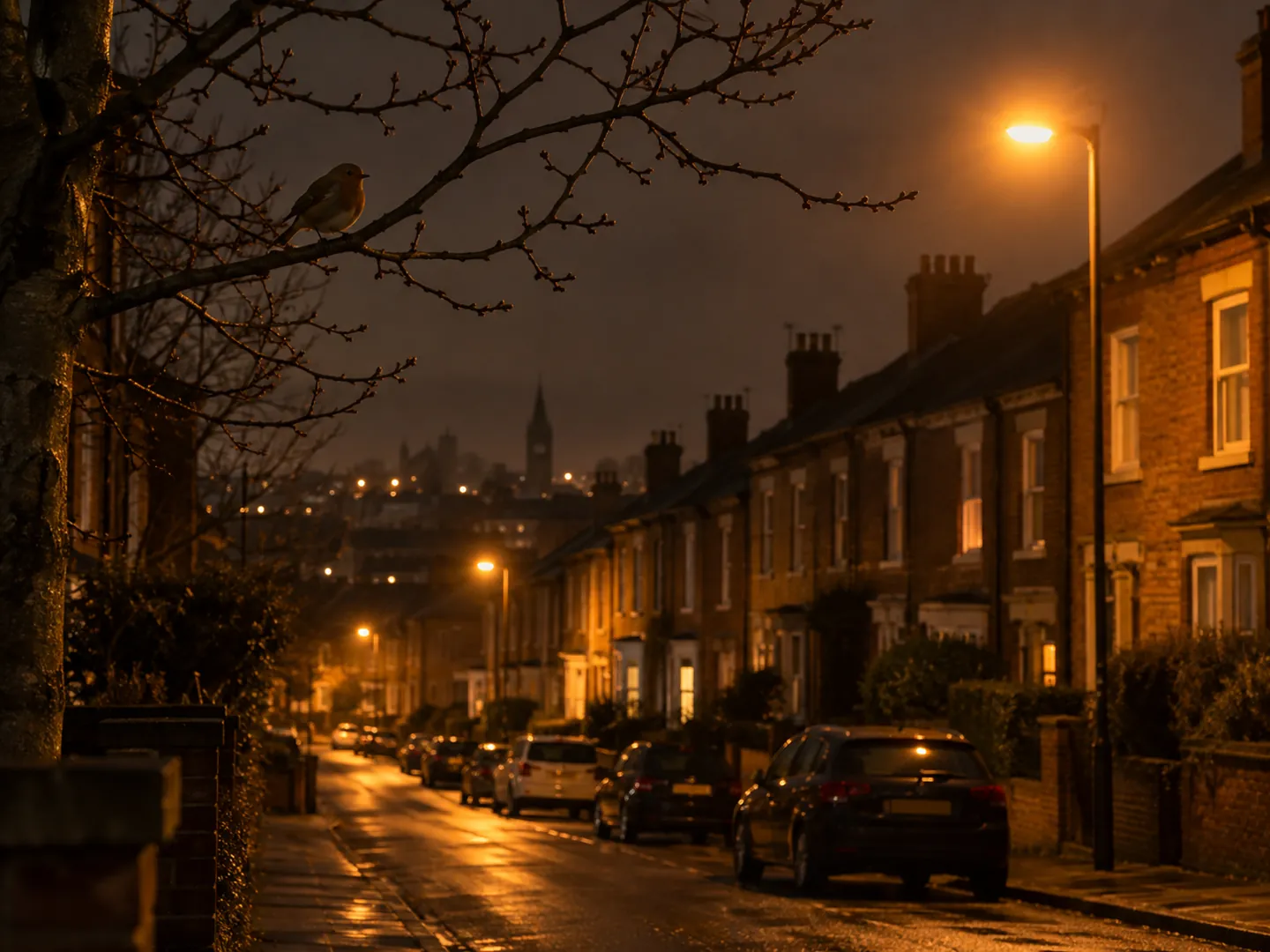
You can enjoy the dawn chorus in the city, and in noisy areas you may hear robins singing at night.
AI-generated image, not a photograph of a real person or place.AI-generated image, not a photograph of a real person or place.
WHY DAWN?
Too dark to feed, perfect for singing.
The RSPB says the purpose of the early burst still is not fully clear. But singing in the dark, when birds cannot yet find food and day predators cannot see them, makes energetic sense, and calm dawn air lets song travel further.
Song is mainly about males defending territories and showing their fitness. At dawn it also tells a mate, at her most fertile time of day, that he is still around. Birds sing at their fastest rate during the chorus.
Questions
Questions people ask
Why do birds sing so early in the morning?
The RSPB says the reasons are not fully settled, but dawn is too dark to feed, predators cannot see well, and still air carries song further. The chorus works as a roll call for rivals and mates.
Which birds start the dawn chorus?
Robins, blackbirds and song thrushes are usually early. A University of Bristol study found songbirds with larger eyes start singing at lower light levels, and so earlier.
How long does the dawn chorus last?
The RSPB says it begins in the dark and lasts 20 minutes to an hour, swelling as more birds and species join with the increasing light.
Why do robins sing at night in towns?
A Sheffield study found robins sang at night in places that were noisy during the day. Daytime noise predicted night singing much better than light pollution did.
Does noise change when birds sing?
Yes. Near Berlin's Tegel airport birds sang earlier to beat air traffic. After the airport closed in 2020, several species shifted back, but some still sang early.